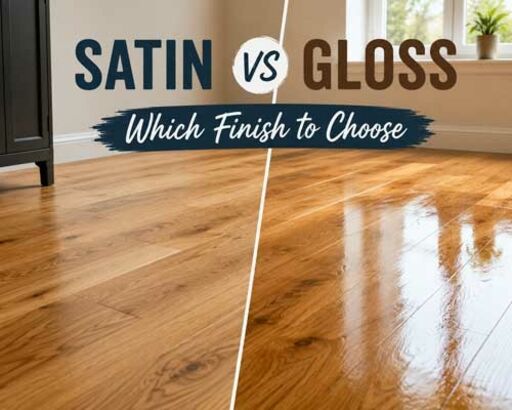
Sheen level is one of the first decisions to make once you've settled on a lacquer, and it changes how a floor lives day to day, not just how it looks on the day it's finished. Satin sits at the lower-sheen end, softer and more forgiving. Gloss sits at the top, sharp and reflective. Both come from the same lacquer ranges, Bona, Junckers, Loba and others each offer sheen options across their lines, so the choice usually comes down to how the floor gets used rather than which brand you've picked.
What satin actually looks like on a floor
Satin gives a soft, even glow rather than a mirror finish. It shows the wood's grain and colour clearly without turning every scuff and dust particle into a visible mark, which is a big part of why it's become the more common choice in busy households with kids or pets. It reads as understated rather than flashy, and tends to suit both traditional and contemporary interiors without fighting against either.
What gloss actually looks like on a floor
Gloss reflects far more light than satin, which can make a room feel brighter and more open, particularly where natural light is limited. It gives wood a polished, almost wet-look depth that satin doesn't achieve. The trade-off is visibility: gloss shows footprints, dust, and fine scratches more readily than any other sheen, so it demands more frequent cleaning to keep looking its best. It tends to suit more formal rooms or spaces styled around sleek, contemporary furnishings rather than everyday family living.
Durability: is one actually tougher than the other?
Sheen level itself doesn't determine durability, the underlying lacquer does. A two-component lacquer like Bona Traffic HD in gloss and the same product in matt offer the same underlying protection; the resin system is what resists scuffing and wear, not the sheen. Where sheen does matter is visual durability: gloss shows early signs of wear sooner because scratches catch and reflect light differently than the surrounding finish, while satin and matt sheens mask that same wear for longer. If you're choosing based on how long a floor will look good rather than how long it's actually protected, satin has the practical edge in a home with regular foot traffic.
Maintenance in practice
Satin floors are genuinely easier to live with day to day. Regular dusting and an occasional damp mop with the right floor cleaner keeps them looking consistent, since dust and light marks don't stand out the way they do on gloss. Gloss floors need more frequent attention, footprints and dust show up quickly, and any light scratching is more visible against the reflective surface, so upkeep becomes part of the ongoing cost of choosing that look.
Matching sheen to the room
| Consideration |
Leans satin |
Leans gloss |
| High foot traffic (hallways, kitchens) |
Better at hiding daily wear |
Shows scuffs and dust faster |
| Natural light |
Works well either way |
Boosts brightness in darker rooms |
| Style |
Traditional, rustic, understated |
Contemporary, formal, statement |
| Maintenance tolerance |
Lower-maintenance |
Needs more frequent cleaning |
There's no wrong answer here, it's a genuine trade-off between look and upkeep rather than one sheen being objectively better.
Application: does sheen change how you apply it?
Not meaningfully. Both are applied the same way, with a lacquer roller or applicator, following the same coat count and drying-time guidance as any other sheen in the same product range. What does matter is checking your chosen sheen is actually available in the specific lacquer line you want, most ranges from Bona, Junckers and Loba offer both, but pack sizes and stock can vary by sheen within a line.
FAQ
Can I mix satin and gloss on the same floor? It's unusual and generally not recommended for a single continuous floor area, since the sheen difference will be obvious under most lighting. Using different sheens in genuinely separate rooms is fine.
Does gloss varnish yellow faster than satin? Yellowing is a property of the lacquer's chemistry, not its sheen, so a water-based lacquer in gloss won't yellow any faster than the same product in satin. Solvent-based lacquers tend to yellow more than water-based ones regardless of sheen.
What sheen do most people choose for a London home? Satin and matt sheens have become the more popular choice in recent years, largely because they're more forgiving day to day, but gloss still suits period properties or rooms designed around a more polished look.
Can I change from gloss to satin later without sanding the whole floor? Not without a full resand in most cases, since the existing lacquer needs to come off before a different sheen can be reapplied evenly. A light abrasive pass and recoat generally needs to stay within the same sheen as what's already there.