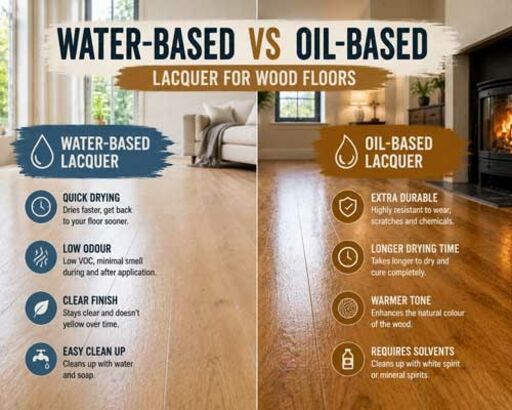
Choosing between water-based and oil-based lacquer for wood floors is a decision that affects not just the appearance of the finished floor but also the application process, drying time, and long-term durability. Both have genuine advantages, and understanding the differences helps you select the right product for your project.
How They Differ in Appearance
One of the most noticeable differences between water-based and oil-based lacquers is the colour they impart to the wood. Oil-based lacquers add a warm amber or yellow tone to the timber, which deepens and enriches natural wood colours. This is a traditional look that many people prefer for classic hardwood species such as oak or pine, where the warmth suits the character of the grain.
Water-based lacquers dry much clearer and produce a cooler, more natural finish that preserves the original colour of the wood. For lighter species and contemporary interiors where a clean, bright look is preferred, water-based lacquer is often the better choice. It also does not yellow significantly over time, whereas oil-based finishes can deepen further as they age. Our floor lacquers range covers water-based options from Bona, Junckers and Loba across the full sheen spectrum.
In terms of sheen levels, both types are available in matte, satin, and gloss finishes, so the visual difference is largely about tone and colour enhancement rather than the level of reflection.
Application and Drying Time
Water-based lacquers dry significantly faster than oil-based alternatives. A coat of water-based lacquer may be touch-dry within an hour and ready for recoating within two to four hours. This makes it possible to apply three coats in a single day, which is a significant advantage when you need to get a room back into use quickly.
Oil-based lacquers take much longer to dry, typically eight to twelve hours between coats, which means a three-coat system can span several days. The slower drying time does allow the finish to self-level more, which can reduce the appearance of brush marks or roller stipple, but modern water-based formulations have largely closed this gap.
Water-based lacquers dry faster, have a lower odour, and clean up with water rather than solvents, though they can raise the grain slightly on the first coat, which usually means a light sanding pass between coats. Oil-based lacquers take longer to dry, carry a stronger solvent odour, and need mineral spirits for equipment cleanup, but they tend to penetrate a little more on the first coat, giving a smoother initial bond.
Durability and Hardness
Modern water-based lacquers have improved dramatically in recent years and now offer excellent durability for residential and even commercial applications. They typically dry to a harder surface film than traditional oil-based lacquers, which makes them more resistant to scratches and abrasion once fully cured.
Oil-based lacquers are tougher in the sense that the finish is more flexible and less likely to crack or chip under impact, but they are generally softer in terms of scratch resistance. For high-traffic areas such as hallways and living rooms, a quality water-based lacquer often performs as well as or better than oil-based alternatives.
Full cure time is another consideration. Water-based lacquers may feel dry within hours but continue to harden for several days. Oil-based lacquers can take up to four weeks to reach full hardness. During this curing period, both types benefit from careful treatment, avoid dragging furniture across the surface and keep rugs off the floor until curing is complete.
Which to Choose
For most modern interiors and light-coloured timber species, water-based lacquer is the preferred choice. It is lower in volatile organic compounds (VOCs), dries faster, and produces a clean, contemporary finish. It is also easier to apply in occupied properties because the odour is far less intrusive.
Oil-based lacquer remains a strong option where a traditional warm tone is wanted, particularly on darker timber species such as walnut or aged oak, or in settings where a classic, rich appearance is the priority. It is also sometimes favoured by professional floor finishers who appreciate the longer working time and self-levelling properties.
Whichever product you choose, preparation is the critical factor. A well-prepared, properly sanded floor with a suitable primer coat will give far better results than a poorly prepared surface with the finest lacquer available.
FAQ
Can I switch from oil-based to water-based lacquer when I refinish a floor? Yes, once the old finish is fully sanded back to bare wood, you can move to a water-based system. Recoating a water-based lacquer directly over an old oil-based finish without sanding back isn't reliable, since adhesion between the two isn't guaranteed.
Does water-based lacquer really not yellow at all over time? It yellows far less than oil-based lacquer, but "won't yellow significantly" is more accurate than "won't yellow at all." Some very slight warming can still occur over many years, particularly under UV exposure from sunlight.
Is oil-based lacquer being phased out in favour of water-based? Water-based lacquers have become the more common choice thanks to lower VOCs and faster turnaround, but oil-based products remain available and still suit specific looks and jobs, they haven't been discontinued.
Which is better for a floor with pets or young children? Water-based lacquers, particularly two-component systems, tend to be the more practical choice for busy households, combining strong scratch resistance with a faster full cure and lower odour during application.